
Bryant Veney - Copywriter, CableCompare
Date Modified: August 6, 2026
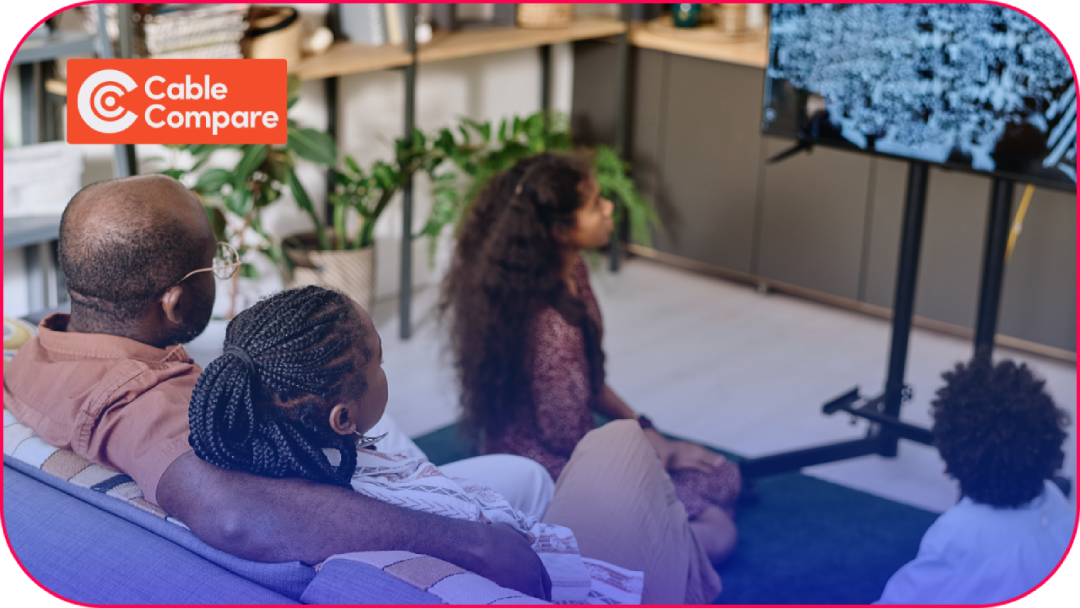
Local channels (ABC, CBS, NBC, FOX, and PBS) are the content most people assume requires a cable subscription. They are actually the easiest category to access for free. A digital antenna delivers all of them in HD with no monthly cost, and several free apps cover local news without any hardware at all. This guide covers every method, what each costs, what each requires, and a decision table to help you choose the right setup for your location and situation.
Quick Answer: How to Watch Local TV Without Cable
If you can install an antenna: do that first. A digital antenna costs $20 to $80 one time and delivers live local channels for free indefinitely. Check your address at AntennaWeb.org before buying to confirm what you will receive and what type you need.
If installation is not an option: free apps like NewsON stream live local news from real affiliate stations in most markets at no cost. For live primetime and sports on all four networks, a live TV streaming service (YouTube TV at $82.99/mo, Hulu + Live TV at $89.99/mo) is the antenna-free alternative.
Local channel availability on streaming services varies by ZIP code. Always check before subscribing.
Key Takeaways: Local TV Access in 2026
ATSC 3.0 (NextGen TV) delivers local channels in 4K HDR over the air at no monthly cost in select markets. Some broadcasters have added DRM encryption to their ATSC 3.0 signals, which requires a certified tuner to decode.
A network tuner (Tablo, HDHomeRun) connects one antenna to your home Wi-Fi and streams live OTA channels to every screen in the house; no coaxial cable runs to each room required.
FAST (Free Ad-Supported Television) apps on Roku, Samsung TV Plus, and Pluto TV carry local news channels in many markets at no cost and require no antenna.
For most live TV streaming services (YouTube TV, Hulu + Live TV, Sling), the advertised price is the real price. DirecTV Stream and FuboTV may add a regional sports fee in some markets and tiers. Always confirm the final price at checkout before subscribing.
Local channel availability on streaming services changes due to carriage disputes. A network that was available last month may not be available today. Check your ZIP code on the service's website before subscribing.
Most markets have 20 to 40 free channels available over the air, not just the five major networks.
Which Method Is Right for You? Local TV Access Options Compared
The right method depends on your location, budget, and hardware tolerance.
Method | Monthly Cost | Hardware Required | Best For | Main Limitation |
Digital antenna | $0 (after $20–$80 hardware) | Indoor or outdoor antenna | Free HD local channels; total cord-cutters | Requires line-of-sight signal; not all locations get all channels |
ATSC 3.0 (NextGen TV) | $0 (after hardware) | NextGen TV tuner or compatible TV | 4K local channels in select markets | Limited market availability; DRM on some broadcasts |
Network tuner (Tablo/HDHomeRun) | $0 (after $80–$200 hardware) | Antenna plus network tuner device | Whole-home OTA without running cable to each TV | Setup requires some technical comfort |
FAST apps (Pluto TV, Samsung TV Plus) | $0 | Smart TV, Roku, or Fire Stick | Local news without any hardware | Limited to news channels; not full broadcast schedule |
Live TV streaming service | $50–$80+/mo | High-speed internet | Full local lineup plus DVR and streaming | Monthly cost; local availability varies by market |
Individual network apps (NBC, ABC, FOX) | $0 | Smart TV or mobile device | Specific network catch-up viewing | Next-day or delayed; not live in most cases |
For households that primarily watch primetime network TV and local news: an antenna covers nearly everything at zero ongoing cost. The only reason to pay for a live TV streaming service is if your location cannot receive a reliable antenna signal, if you need a cloud DVR without additional hardware, or if local channels are part of a broader bundle decision that also includes cable news and sports.
For households that only need local news and weather: a free app like NewsON or a FAST service on a smart TV covers that need entirely without hardware or a subscription.
For households with multiple TVs in different rooms: a network tuner eliminates the need to run coaxial cable to each set while still delivering free OTA channels everywhere.
What’s available in your market is not what’s available in someone else’s.
Local TV options vary significantly by zip code. Enter yours and see exactly which providers and TV options are available where you actually live.
The Digital Antenna: Free Local TV After One Hardware Purchase
A digital antenna is the cheapest and most reliable way to get local TV channels without cable. It receives free over-the-air broadcasts from every major network with no monthly cost.
How over-the-air broadcasting works
Broadcast networks transmit their signals through the air from local towers. A digital antenna captures those signals and delivers them to your TV, the same way radio has worked for a century. There is no subscription, no login, and no monthly fee. The FCC requires broadcasters to make their signals freely available to the public.
What you receive depends on your market: primary ABC, CBS, NBC, FOX, PBS, and CW affiliates plus a wide range of subchannels including MeTV, Comet, Decades, Ion, Antenna TV, and local weather channels. Most markets have 20 to 40 free channels available over the air.
Choosing the right antenna for your location
Distance from the broadcast towers is the single most important factor in antenna selection.
Distance from Towers | Recommended Antenna Type | Cost |
Under 30 miles | Basic indoor flat antenna | $20–$35 |
30–50 miles | Amplified indoor antenna | $40–$60 |
30–50 miles with obstructions | Attic-mounted antenna | $40–$80 |
Over 50 miles or heavy obstruction | Outdoor or roof-mounted directional antenna | $60–$150 |
Before purchasing, enter your address at AntennaWeb.org or the FCC's DTV Reception Maps tool. Both show which channels are receivable at your address, which direction your towers are, and which antenna type is recommended for your specific location.
Why reception sometimes fails
Digital TV signals travel in straight lines and are weakened by physical obstacles. Hills, tall buildings, dense tree cover, and terrain between your home and the broadcast tower all reduce signal strength.
In urban areas, signals bounce off buildings and arrive at the antenna from multiple directions simultaneously, causing pixelation or dropouts on specific channels even when others come in clearly.
Modern energy-efficient windows with Low-E (low-emissivity) metallic coatings block radio frequencies including TV signals. An antenna placed near or behind Low-E glass may receive a significantly weaker signal than the same antenna near a standard window.
The solution hierarchy: raise the antenna as high as possible in the room, move it to a window facing your towers, try an attic mount if indoor placement is unreliable, or step up to an outdoor antenna for consistently difficult locations.
UHF vs. VHF: why frequency still matters
Broadcast TV stations transmit on two different frequency ranges: UHF (Ultra High Frequency) and VHF (Very High Frequency). Different antenna designs receive each more effectively.
The FCC spectrum repack completed between 2017 and 2020 moved many stations to new frequencies. In most markets, the major network affiliates now broadcast on UHF, but some markets have primary affiliates on low-band VHF. A flat antenna handles UHF well. A traditional rabbit-ears antenna handles VHF. Combination antennas cover both.
Check AntennaWeb.org for your specific market before purchasing. The tool shows which frequency band each channel uses so you can confirm the antenna you are considering will receive all the channels you want.
NextGen TV (ATSC 3.0): Local Channels in 4K Over the Air
NextGen TV is the new over-the-air broadcast standard rolling out in U.S. markets that delivers local channels in 4K HDR with improved audio, available free on a compatible tuner with no monthly cost.
What the upgrade delivers
ATSC 3.0, branded as NextGen TV, is the successor to the current digital broadcast standard. It delivers 4K HDR video, Dolby Atmos audio, more targeted emergency alerts, and better signal reliability in weak-signal areas. The same antenna you use today receives ATSC 3.0 signals. The upgrade is in the tuner, not the antenna.
To receive NextGen TV broadcasts, you need either a television with a built-in ATSC 3.0 tuner (Sony and Samsung have included these in select models since 2022) or a standalone ATSC 3.0 USB tuner connected to a compatible TV. ATSC 3.0 broadcasts are active in a growing number of U.S. markets; check NextGenTV.com for the current list of markets and available stations.
The DRM issue on some ATSC 3.0 broadcasts
A significant development in 2026: some broadcast groups are applying DRM (Digital Rights Management) encryption to their ATSC 3.0 signals. A DRM-encrypted signal requires device authentication to decode, which effectively places a registration requirement on content that has historically been freely receivable by any antenna.
This practice is contested. Consumer advocates and some members of Congress have raised concerns about encrypting publicly licensed broadcast signals. The regulatory status of broadcast DRM is not settled.
The practical implication: if you purchase an ATSC 3.0 tuner and find specific channels locked, DRM encryption is the most likely cause. Check NextGenTV.com for your market to see which stations are broadcasting and whether DRM is noted for any of them.
Network Tuners: One Antenna for Every Screen
A network tuner connects one antenna to your home Wi-Fi router and streams live and recorded OTA channels to every TV, phone, tablet, and streaming device in the house. No coaxial cable needs to run to each room.
How the setup works
The antenna connects to the tuner device, which connects to your router via Ethernet. The tuner broadcasts the OTA signal over your home network. From there, any device with the companion app (Roku, Apple TV, Fire Stick, Android TV, iOS, Android, or a web browser) can watch live or recorded local channels from anywhere in the house.
Most network tuners include DVR functionality. Depending on the model, recording storage is handled by a connected USB hard drive or a cloud subscription.
Tablo vs. HDHomeRun
Feature | Tablo | HDHomeRun |
Ease of setup | High (app-guided) | Moderate (more manual) |
DVR | Optional (subscription or built-in depending on model) | Requires third-party software (Plex, Emby) |
Best platform integration | Roku, Fire Stick | Plex, home media servers |
Hardware cost | $80–$200 | $80–$150 |
Best for | Casual users wanting simple whole-home OTA | Technical users with existing media server setup |
Tablo is designed for consumer ease of use: the app guides setup, and it integrates cleanly with Roku and Fire TV. HDHomeRun appeals to technical users who want to feed OTA content into Plex, Emby, or other home media software. Both devices receive the same channels; the difference is entirely in the interface and ecosystem.
Live TV Streaming Services With Local Channels
Live TV streaming services are the most convenient way to get local channels without cable, but they carry a meaningful monthly cost. Whether that cost is justified depends on how much of the broader channel lineup you will actually use. Compare every cable and streaming provider available at your address at CableCompare before subscribing to any service.
Services, costs, and local channel coverage
Service | Local Channels | Monthly Cost | DVR | Best For |
YouTube TV | ABC, CBS, NBC, FOX, PBS in most markets | $55.00–$82.99/mo | Unlimited cloud DVR | Most comprehensive local coverage |
Hulu + Live TV | ABC, CBS, NBC, FOX in most markets | ~$89.99/mo | Unlimited cloud DVR | Disney bundle included |
FuboTV | ABC, CBS, NBC, FOX in most markets | ~$73.99/mo | Unlimited cloud DVR | Sports-focused households |
Sling TV (Blue) | NBC, FOX in select markets only | ~$46.00/mo | 50 hours DVR | Budget option; local availability limited |
DirecTV Stream | ABC, CBS, NBC, FOX in most markets | ~$89.99/mo | Unlimited cloud DVR | AT&T bundle users |
Prices reflect published rates as of early 2026. Local channel availability varies by market and changes due to carriage disputes.
Why local channels are sometimes missing from streaming services
To carry a local ABC, CBS, NBC, or FOX affiliate, a streaming service has to pay that station's parent company for the right to include it in its lineup. These are called retransmission consent agreements, and they have to be renegotiated periodically. When the two sides cannot agree on price, the station goes dark on the service until a deal is reached. The viewer loses access to that channel in the meantime, sometimes for weeks, sometimes for months. This is not a technical problem. It is a business dispute, and it has happened on every major live TV streaming service at one point or another.
For most live TV streaming services, including YouTube TV, Hulu + Live TV, and Sling, the advertised monthly price is the price you pay. DirecTV Stream and FuboTV may apply a regional sports fee in certain markets and package tiers, which can add to the advertised base price. Check the final checkout price before subscribing.
Before subscribing to any service, use the ZIP code lookup tool on the service's website. Every major live TV streaming service shows exactly which local channels are available at your address before you enter payment information.
Free Local News Without an Antenna or Subscription
Free apps and FAST services deliver local news content without any hardware, antenna, or monthly fee. These do not replace a full broadcast schedule, but they cover local news and weather completely for free.
Dedicated local news apps
NewsON aggregates live local news streams from hundreds of local TV stations nationwide. Enter your ZIP code and it surfaces live streams from the ABC, CBS, NBC, and FOX affiliates in your market. No account required for most markets.
Haystack News curates local and national news clips by location, updated continuously throughout the day. An account is free to create.
Individual station apps: most local ABC, CBS, NBC, and FOX affiliates have their own free apps that stream live newscasts and provide on-demand news clips. Search your local station's call letters or market name in your device's app store to find them.
The limitation of all these apps is scope: they cover news programming, not the full broadcast schedule. Primetime shows, syndicated programming, sports, and movies are not included.
FAST channels for local news
FAST (Free Ad-Supported Television) platforms carry local news channels in many markets as part of their live channel lineups.
Pluto TV includes national news networks (CBS News, NBC News, Fox News) and some local news affiliate feeds in select markets. Samsung TV Plus, built into Samsung smart TVs, includes local news channels in a number of markets. LG Channels on LG smart TVs offers similar built-in local news content.
These are effective for households that want a lean-back news experience on a smart TV without setting up a separate app. Coverage in major markets is generally solid; smaller markets have fewer options.
Local Sports Without Cable in 2026
Local sports is the hardest part of cutting the cable cord. The right approach depends entirely on which sport and which team you follow.
What is still free over the air
A significant portion of major sports still broadcasts on free OTA channels. NFL games air on CBS, NBC, FOX, and ABC each week of the regular season, along with the playoffs and Super Bowl. Major college football airs on ABC, CBS, and FOX. College basketball conference tournaments and the NCAA Tournament air on CBS and ABC. The Olympics air on NBC. NASCAR Cup Series races split between FOX and NBC.
This is the most overlooked fact in sports cord-cutting: the most-watched sporting events of the year are still available free with an antenna in most markets.
Regional sports and the streaming shift
Regional sports networks (RSNs) carry the majority of local MLB, NBA, and NHL regular season games. These were cable-exclusive for most of their history. The RSN landscape has changed significantly in recent years following Diamond Sports Group's bankruptcy restructuring.
Some RSNs have launched direct-to-consumer streaming apps, allowing fans to subscribe without cable. The availability of these apps varies by team and market. Check your specific team's official website for current streaming options, as the RSN situation continues to evolve.
For national sports packages, NFL Sunday Ticket is available through YouTube as a standalone purchase or as a YouTube TV add-on. MLB.TV provides out-of-market games for baseball fans, with local game blackouts applying based on your location.
Conclusion: Match the Method to Your Situation
For most households, a digital antenna plus one free news app covers the majority of local TV needs at zero monthly cost. An antenna provides every major network live, including sports and primetime. A free news app covers local news without any hardware. That combination costs $20 to $80 one time.
The only reasons to pay for a live TV streaming service for local channels are if your location cannot receive a reliable antenna signal, if you need cloud DVR without additional hardware purchases, or if local channels are part of a broader subscription decision that also includes cable news, sports networks, or a streaming content library.
For whole-home access without running cables, a network tuner adds that capability for $80 to $200 one time with no ongoing cost.
Check your antenna options first. Most households will find that free covers more than they expected.
Compare cable and internet providers available at your address at CableCompare to see how local channel access through cable compares to the free and low-cost options above.
See the full lineup of providers available at your address.
CableCompare goes beyond free TV and shows you every internet and TV provider available in your area so nothing slips through the cracks.
FAQ
Can I watch local channels on my smart TV without an antenna?
Yes, through two methods. First, most smart TV platforms include built-in FAST services (Samsung TV Plus on Samsung TVs, LG Channels on LG TVs) that carry local news channels in many markets at no cost. Second, free apps like NewsON stream live local newscasts from local affiliates in hundreds of markets. Neither method delivers the full broadcast schedule. Primetime programming, sports, and syndicated shows still require an antenna or a live TV streaming service.
What is the cheapest way to get local channels without cable?
A digital antenna is the cheapest option at $20 to $80 one time with no ongoing monthly cost. It delivers all major local networks in HD plus dozens of subchannels. For local news specifically, free apps like NewsON cost nothing and require no hardware. If you need local channels plus a broader cable channel lineup, live TV streaming services start at $46 per month, though local channel availability is not guaranteed in every market.
Why is my local NBC (or ABC, CBS, FOX) missing from my streaming service?
The most common reason is a carriage dispute: the streaming service and the local affiliate's parent company could not agree on retransmission fees, so the channel was pulled from the service. This is temporary in most cases but can last weeks or months. The second reason is geographic: your billing address may be in a market where that service does not have a retransmission agreement with the local affiliate. Use the service's ZIP code lookup tool to confirm what is available at your address before subscribing.
Why is my local NBC (or ABC, CBS, FOX) missing from my streaming service?
The most common reason is a carriage dispute: the streaming service and the local affiliate's parent company could not agree on retransmission fees, so the channel was pulled from the service. This is temporary in most cases but can last weeks or months. The second reason is geographic: your billing address may be in a market where that service does not have a retransmission agreement with the local affiliate. Use the service's ZIP code lookup tool to confirm what is available at your address before subscribing.
Is there a free app for local news and weather?
Yes. NewsON is the strongest option, providing live streams from hundreds of local ABC, CBS, NBC, and FOX affiliate stations across the country, searchable by ZIP code, with no account required. Most local affiliates also have their own free apps with live news streams and on-demand clips. For weather specifically, the Weather Channel app and Weather Underground both provide local forecasts for free. FAST services like Pluto TV and Samsung TV Plus include news channels with local weather segments in many markets.
How do I connect my antenna to all my TVs?
The simplest approach for a single TV is a direct coaxial connection from the antenna to the TV's ANT IN port. For multiple TVs, you have two options. First, use a coaxial splitter, which divides the antenna signal and runs separate coaxial cables to each TV; signal strength decreases with each split, so an amplified antenna or a distribution amplifier helps maintain quality. Second, use a network tuner (Tablo or HDHomeRun), which connects one antenna to your router and streams OTA channels over Wi-Fi to every device in the house without any additional cables.
What is NextGen TV and do I need a new antenna for it?
NextGen TV (ATSC 3.0) is the new over-the-air broadcast standard that delivers local channels in 4K HDR with improved audio. You do not need a new antenna. Your existing antenna receives ATSC 3.0 signals on the same frequencies as current broadcasts. What you do need is a compatible tuner: either a television with a built-in ATSC 3.0 tuner (available in select Sony and Samsung models from 2022 onward) or a standalone ATSC 3.0 USB tuner. ATSC 3.0 broadcasts are currently available in a growing number of U.S. markets; check NextGenTV.com to see if your market is included.
How far from the tower can an antenna receive a signal?
A basic indoor flat antenna typically receives signals reliably within 20 to 30 miles of broadcast towers in clear conditions. An amplified indoor antenna extends that to 35 to 50 miles. An outdoor or roof-mounted directional antenna can receive signals from 60 to 100 miles or more depending on terrain and tower height. Real-world performance varies based on obstructions, terrain, and local interference. Enter your address at AntennaWeb.org for a personalized estimate based on your specific location and the towers in your market.
What is the best live TV streaming service for local channels?
YouTube TV offers the broadest local channel coverage of any live TV streaming service, with ABC, CBS, NBC, FOX, and PBS available in most U.S. markets. Hulu + Live TV and FuboTV cover local channels in most markets as well. Sling TV's local channel coverage is the most limited of the major services, available in select markets and only on the Blue plan. Before subscribing to any service, use its ZIP code checker to confirm which local channels are actually available at your address, as coverage varies by market.
Can I watch local channels on Roku without cable?
Yes, through several methods. A network tuner like Tablo or HDHomeRun streams live OTA channels to the Roku app over your home Wi-Fi with no cable connection required. The Roku Channel includes FAST local news channels in many markets at no cost. Individual network apps (ABC, NBC, FOX, CBS) are available on Roku and provide some live and next-day content. For a full live local channel lineup on Roku, a live TV streaming service subscription such as YouTube TV or Hulu + Live TV works within the Roku interface.
Do I need internet to use a TV antenna?
No. An antenna receives over-the-air broadcast signals entirely independently of your internet connection. Connecting an antenna directly to a TV's coaxial input works without any internet service at all. Internet is only required if you use a network tuner (which streams the OTA signal over your home Wi-Fi) or a live TV streaming service. A basic antenna-to-TV setup is completely offline and will continue working during internet outages.
What local channels come with Hulu + Live TV?
Hulu + Live TV includes ABC, CBS, NBC, and FOX local affiliates in most U.S. markets. PBS is not included. Local channel availability is tied to your billing address and varies by market; not all markets have all four networks available on the service. Use Hulu's channel lineup checker at hulu.com/live-tv and enter your ZIP code to see exactly which local channels are available at your address before subscribing. Hulu + Live TV also includes unlimited cloud DVR, allowing you to record local broadcasts you cannot watch live.
How do I find out which local channels I can receive with an antenna?
Enter your address at AntennaWeb.org or use the FCC's DTV Reception Maps tool. Both tools show every broadcast tower within range of your address, the channels each tower transmits, the direction and distance from your home to each tower, and the recommended antenna type for your location. This takes about two minutes and gives you a precise picture of what your antenna will receive before you purchase anything.